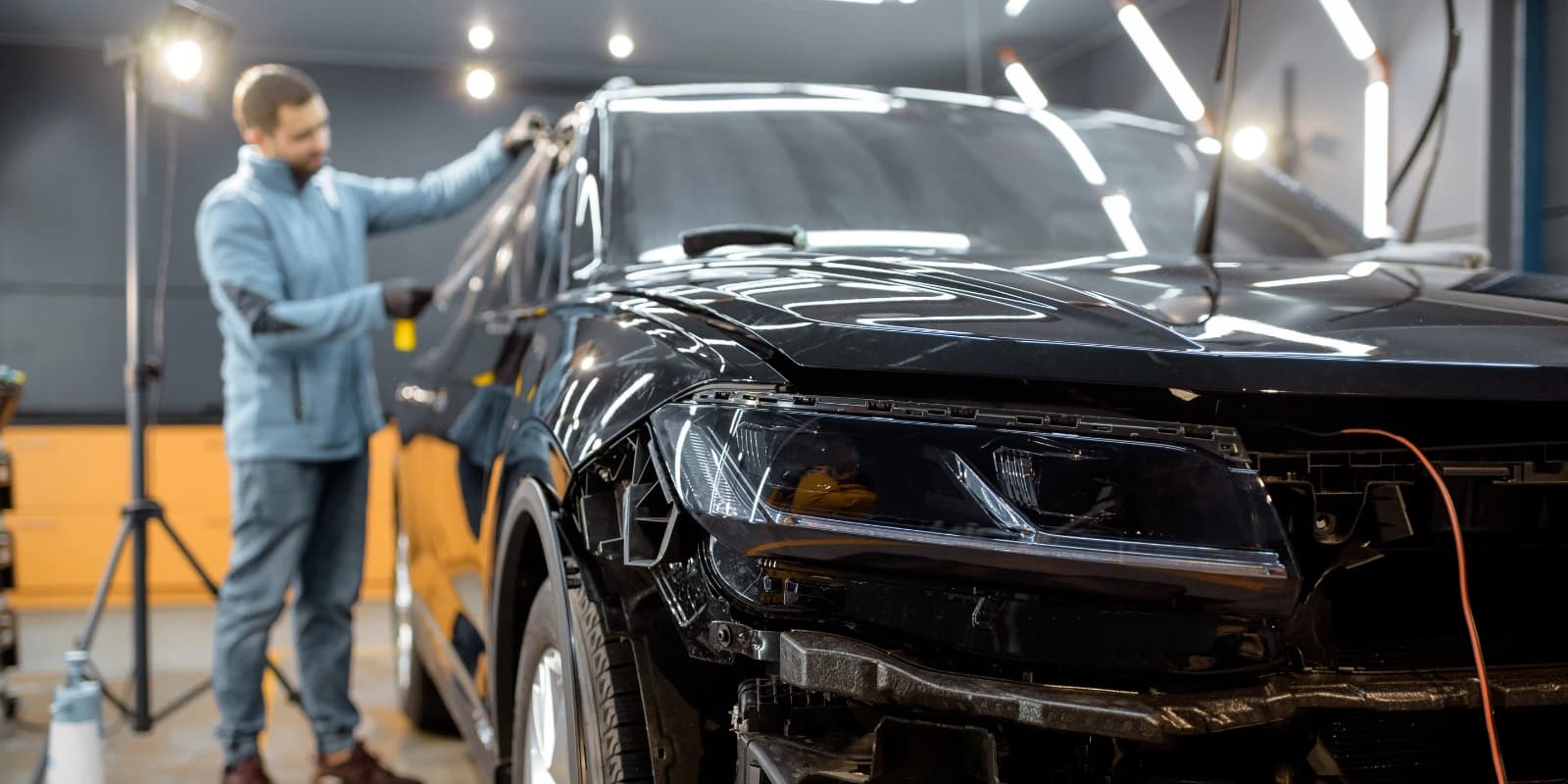
Select Request Your Estimate to tell us about your car and request a free, over-the-phone estimate.
or Call us at 720-720-9200
We understand the stress an accident causes. Which is why we offer the following services to help make repairing your vehicle's collision damage easier.
Send us photos of the damage and we'll get you an estimate — no in-person visit required to start.
We help with your estimate documentation and communication with your insurance company about the repair.
Car not drivable? Call us and we'll help coordinate a tow to get your vehicle to our Denver shop.
We keep you updated by phone, email, or text at every step of your repair — you choose how you hear from us.
Collision, frame, dent, hail, and paint repair for a broad range of domestic and import vehicles.
Based at 1175 S Lipan Street Unit B, Denver, CO 80223 — auto body and collision repair for drivers across the Denver metro.

Select Request Your Estimate or call our shop to get started. We'll assess the damage and provide a repair plan and estimate.

If your car is too damaged to drive or stuck at another shop, call us and we'll help coordinate a tow to get it here.

Using insurance? We help with the estimate documentation and communication with your insurer about the repair.
We quality-check your repair before handing your car back, and keep you updated along the way.
About Us
Spargo Collision Center is a Denver auto body shop handling collision repair, paint and refinishing, dent and hail repair, frame and unibody work, and glass replacement. We focus on solid repairs and clear communication from the first estimate to pickup.
We're based on S Lipan Street just south of downtown Denver and serve drivers across the metro. Start with a free photo estimate, and we'll help with your insurance claim and keep you updated by phone, email, or text along the way.

Denver shop
1175 S Lipan Street Unit B, Denver, CO 80223
Call 720-720-9200 to discuss damage, towing, or the next inspection step.
Reviews
We'd rather show you real reviews than quote a number. Look us up on Google to read what customers say, or leave a review of your own.
Call Us
720-720-9200Hours Of Operation
Mon-Fri 8am-6pm
Saturday 9am-4pm
Shop Address
1175 S Lipan Street Unit B, Denver, CO 80223
Tell us a little about your car and we'll send you a free, over-the-phone estimate — it only takes a minute.
Prefer to talk? Call 720-720-9200
Free photo estimates to start the conversation
Repair planning for cosmetic and structural collision damage
Insurance claim documentation and communication support
Updates from estimate through vehicle pickup
01
After a crash, safety comes before the body work. If anyone may be injured, contact emergency services. If the vehicle has leaking fluids, damaged lights, a tire rubbing a panel, broken glass, steering problems, or other signs that it may be unsafe, do not assume it is ready for normal driving. Move it only when doing so is safe and legal. Spargo can help coordinate towing to the Denver shop when a vehicle is not drivable, but the condition of the vehicle and the situation at the scene determine the right next step.
Once immediate concerns are handled, collect useful information. Photograph the full vehicle, each damaged area, the surrounding panels, visible gaps, lights, wheels, glass, and the accident scene when appropriate. Exchange contact and insurance information with the other driver and keep claim numbers, police information, and towing records together. Clear documentation gives the repair shop and insurer a better starting point, although photographs cannot reveal every condition behind a bumper, trim piece, or exterior panel.
A Spargo photo estimate is an efficient first conversation, not a final promise about price or timing. The team can review what is visible, discuss likely next steps, and explain when the vehicle should be inspected in person. That distinction matters because collision damage often involves more than the obvious dent or scrape.
02
Collision repair begins with an assessment of the affected areas. A repair plan may consider exterior panels, bumpers, mounting points, lamps, glass, trim, wheel openings, panel alignment, paint damage, and signs of structural movement. The goal is to identify what can be repaired, what may need replacement, and which areas require additional access before a sound decision can be made. Vehicle construction and the location and direction of the impact both affect that plan.
Some damage remains hidden until parts are removed. A bumper cover can conceal damaged brackets, absorbers, sensors, or nearby sheet metal. A sharp impact can also affect gaps and alignment outside the most visible area. When additional damage is discovered, the estimate may need a supplement that documents the revised work and required parts. Spargo explains those changes and, when an insurance claim is involved, can provide repair documentation and communicate about the repair. Coverage decisions remain with the insurer and the vehicle owner.
The plan also separates cosmetic concerns from conditions that may affect how the vehicle fits together or operates. Paint scratches and surface dents require a different approach than damaged mounting locations or structural areas. Careful planning before the main repair helps reduce guesswork and gives the customer a clearer picture of the work ahead.
03
Denver drivers may use an insurance claim, pay out of pocket, or compare both paths before deciding. The right choice depends on the loss, the policy, the deductible, responsibility for the collision, and the owner's priorities. A repair shop can document damage and explain repair considerations, but it does not decide whether a loss is covered. For questions about deductibles, rental coverage, policy limits, or how a claim could affect future premiums, speak directly with the insurer or insurance professional responsible for the policy.
When insurance is involved, Spargo can help organize estimate information, repair photos, and communication about the work. If hidden damage changes the repair plan, updated documentation can be provided for review. You retain the right to choose a repair facility; an insurer may recommend shops or describe its own procedures, but you can ask questions and select the shop you want to work with. Confirm any policy-specific requirements before authorizing work.
For an out-of-pocket repair, tell the estimator what matters most to you and whether you are comparing options. A lower visible-damage estimate is not automatically the same repair plan as a more complete estimate. Compare the scope, included parts and materials, assumptions about hidden damage, and what happens if the plan changes after disassembly. A clear scope is more useful than a single number without context.
04
Once the repair plan and authorization are in place, the work proceeds according to the damage found on that vehicle. The sequence may include disassembly, panel repair or replacement, structural or fit-related work where needed, preparation for refinishing, reassembly, and a final review. Not every collision requires every step. A light bumper scrape and a multi-panel impact are different jobs, even when both are described broadly as collision repair.
Paint and refinishing are coordinated with the body work when repaired or replaced areas need a finished surface. Preparation matters because the final appearance depends on the condition of the substrate as well as the color applied above it. The paint code provides a starting reference, while the vehicle's current finish, age, previous repairs, exposure, and nearby panels can affect how the color appears. The objective is a cohesive repair, with the refinishing approach determined after the vehicle is evaluated.
Parts availability can influence the order of work. Some parts arrive quickly, while others require additional sourcing or verification. The shop can explain known constraints and update the customer when a material change affects the plan. Avoid treating an early schedule as an unconditional guarantee, especially before the vehicle is inspected and required parts are confirmed.
05
Repair time depends on the extent and location of damage, how much disassembly is needed, parts availability, refinishing steps, outside approvals, and what is discovered after access to the impacted area. Two vehicles with similar-looking exterior damage can require different work because the parts underneath, vehicle design, prior condition, and impact direction differ. That is why a reliable timeline is tied to a specific repair plan rather than a general online estimate.
The process can also include pauses that are not visible from the shop floor. An insurer may need to review a supplement, a part may need to be reordered, or additional work may need customer authorization. Spargo provides the best current information available and communicates when the expected path changes. Customers can choose updates by phone or email, and may choose text updates only by separately opting in through the estimate form.
If transportation planning is important, check rental coverage and availability early. Spargo can help explain the expected repair stage, but rental eligibility and payment are determined by the customer's policy and rental provider. Keeping the shop, insurer, and rental contact information together makes it easier to respond when the schedule changes.
06
Before delivery, the completed work should be reviewed against the repair plan. At pickup, look over the repaired area in good light, ask what work was completed, and make sure you understand any care instructions for refinished surfaces. Confirm that personal items and documents are returned and that you know whom to contact if a question arises after you leave. A clear handoff is part of a well-managed repair.
Spargo focuses on straightforward communication from the first estimate through pickup. The shop serves drivers from Denver and nearby communities from 1175 S Lipan Street Unit B, Denver, CO 80223. You can begin online with photos or call 720-720-9200 to discuss collision damage, towing coordination, insurance documentation, or the next practical step for your vehicle. An in-person inspection may still be needed before final pricing or a complete schedule can be established.
Related Repair Guides
Learn how repaired panels are prepared, color evaluated, and refinished.
Read about Auto Paint & RefinishingCompare paintless dent repair with conventional body and paint work.
Read about Dent Removal & PDRUnderstand assessment, insurance considerations, and repair paths after a storm.
Read about Hail Damage RepairSee why structural damage requires a vehicle-specific inspection and repair plan.
Read about Frame & Unibody RepairFAQs
Collision repair cost depends on the vehicle, the location and severity of the impact, labor and refinishing needs, required parts, and damage that may be hidden behind exterior components. A surface scrape and structural damage are not comparable jobs. Spargo offers a free photo estimate as a starting point, then explains when an in-person inspection or disassembly is needed before final pricing. Ask for the repair scope as well as the price so you understand what the estimate includes.
The timeline is specific to the repair plan. Damage severity, disassembly, parts availability, refinishing, insurer review, customer authorization, and newly discovered damage can all affect completion. Spargo gives you the best available schedule after evaluating the vehicle and provides updates when a meaningful change occurs. An early estimate should be treated as a planning range, not a guarantee made before all damage and parts needs are known.
No. You may choose the repair facility that works on your vehicle. An insurer can recommend a shop and may explain its claim procedures, but the final choice belongs to the vehicle owner. Spargo can prepare estimate documentation and communicate with an insurer about the repair, while the insurer retains responsibility for coverage decisions. Review your policy and ask questions if you are unsure about a claim requirement.
The process generally begins with damage documentation and an initial estimate, followed by an in-person assessment when needed. After authorization, the vehicle may be disassembled so hidden damage can be identified and the repair plan updated. Appropriate body, structural, fit, and refinishing work is then completed, followed by reassembly and a review before pickup. The exact steps vary because every impact and vehicle is different.